Who is he?
A working student who has studied and trained with Henry Wong for about two years — progressing from a single position at the start to independently managing an options portfolio across more than a dozen HK stocks.
What did he do?
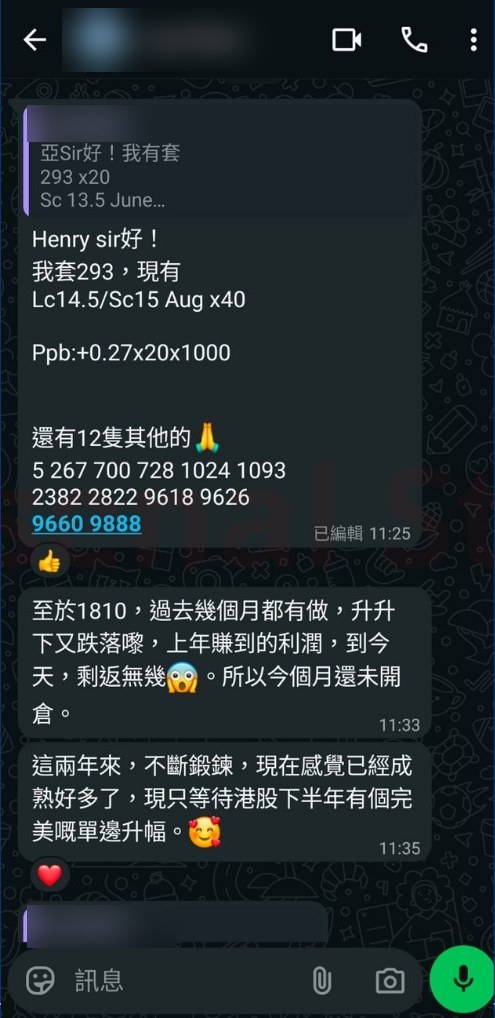
One of the deployments: 0293.HK Cathay Pacific (each options contract = 1,000 shares)
| Action | Contract | Contracts | Premium (HKD) |
|---|---|---|---|
| Long Call | Strike $14.5 · Aug expiry | ×40 | Premium paid |
| Short Call | Strike $15 · Aug expiry | ×40 | Premium received |
| Locked-in total profit (Ppb) | Received and paid offset each other — net +$0.27/share × 1,000 shares × 20 contracts | +$5,400 | |
Note: $14.5 / $15 are strike prices (the levels used for settlement at expiry), not amounts paid; what is actually paid and received is the premium (measured in cents, not dollars) — the net premium received on this deployment is +$0.27 per share.
At the same time, he manages options positions on another 12 HK stocks: 0005.HK HSBC, 0267.HK CITIC, 0700.HK Tencent, 0728.HK China Telecom, 1024.HK Kuaishou, 1093.HK CSPC Pharmaceutical, 2382.HK Sunny Optical, 2822.HK CSOP FTSE China A50 ETF, 9618.HK JD.com, 9626.HK Bilibili, 9660.HK Horizon Robotics, 9888.HK Baidu.
His stance on 1810.HK Xiaomi: it has churned up and down for months and last year's profits have been given back — so he is sitting out this month with no new positions, waiting for a better opportunity.
In his own words
What was the result?
What's the lesson?
- Portfolio-style rent collection — rely on a basket of deployments, not a single stock
- Knowing when to stop is a skill too: when profits give back, pause and watch rather than force trades